India's Ministry of Railways has officially unveiled the first look of its debut bullet train, set to transform travel between Mumbai and Ahmedabad at speeds of up to 320 kmph by Independence Day 2027.
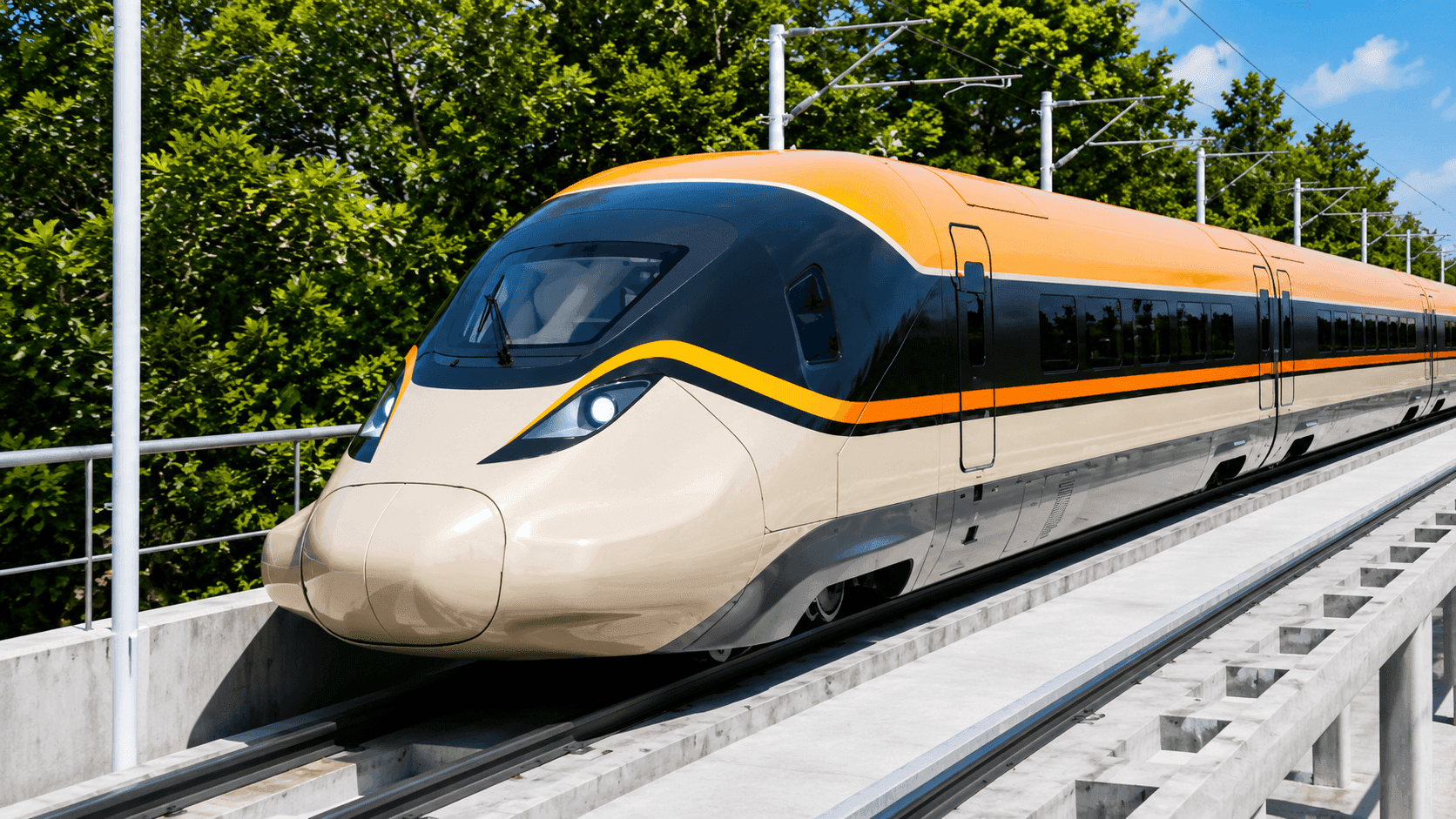
India's long-awaited bullet train dream has taken a significant step closer to reality. On May 18, 2026, the Ministry of Railways officially unveiled the first look of the country's proposed high-speed train for the Mumbai–Ahmedabad High-Speed Rail (MAHSR) corridor - a landmark moment for Indian infrastructure. A framed image of the aerodynamic train, painted in white and orange, has been installed at Gate Number 4 of the Ministry of Railways building in New Delhi, offering citizens and stakeholders their first public glimpse of what is set to become India's fastest passenger train.
The unveiled design showcases a sleek, aerodynamic high-speed train set bearing the signature white-and-orange livery. The visual identity draws inspiration from Japan's world-renowned Shinkansen bullet trains, which form the technological backbone of the project. The train is being developed indigenously under India's flagship Make in India and Aatmanirbhar Bharat initiatives, with Chennai-based Integral Coach Factory (ICF) and Bengaluru-based BEML jointly responsible for designing and manufacturing the train sets.
The BEML–Medha Servo Drives consortium has submitted a bid to supply 16 high-speed trainsets for the corridor, with BEML handling fabrication and assembly at its Bengaluru rail coach complex, and Hyderabad-based Medha contributing electric traction motors, bogies, and control systems. The total contract value for the initial two prototype train sets stands at ₹866.87 crore, with each coach priced at ₹27.86 crore. The first indigenous prototype is now expected to roll out by March 2027.
| Detail | Specification |
|---|---|
| Corridor Length | 508 km |
| Top Speed | 320 kmph |
| Design Speed (Indigenous) | 280 kmph |
| Express Travel Time | 2 hours 7 minutes |
| All-Stop Travel Time | 2 hours 58 minutes |
| Number of Stations | 12 |
| Daily Services | 70 (35 each direction) |
| Launch Target | August 15, 2027 |
| Project Cost | ₹1.1 lakh crore (revised upward by ~83%) |
| Technical Partner | Japan (Shinkansen technology) |
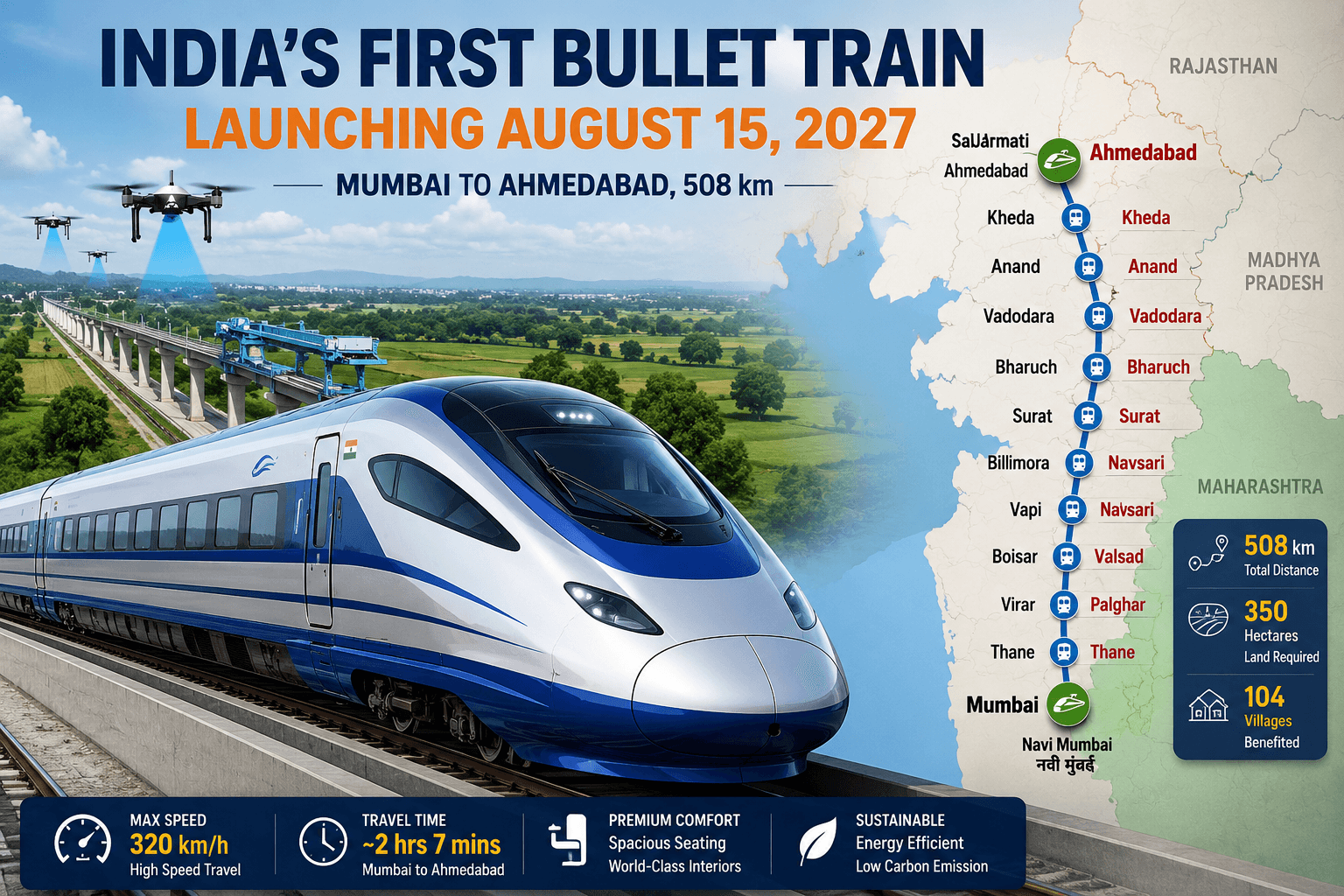
The MAHSR corridor originates at Bandra Kurla Complex (BKC) in Mumbai and terminates at Sabarmati in Ahmedabad, passing through the states of Maharashtra, Gujarat, and the Union Territory of Dadra and Nagar Haveli. The 12 planned stations along the route are:
Indian Railways plans to operate two types of services: a Rapid Train (express) that stops only at Surat and Vadodara, completing the journey in 2 hours and 7 minutes, and a slower service stopping at all stations, taking approximately 2 hours and 58 minutes. During peak hours, passengers can expect a train every 20 minutes - with a total of 70 daily services.
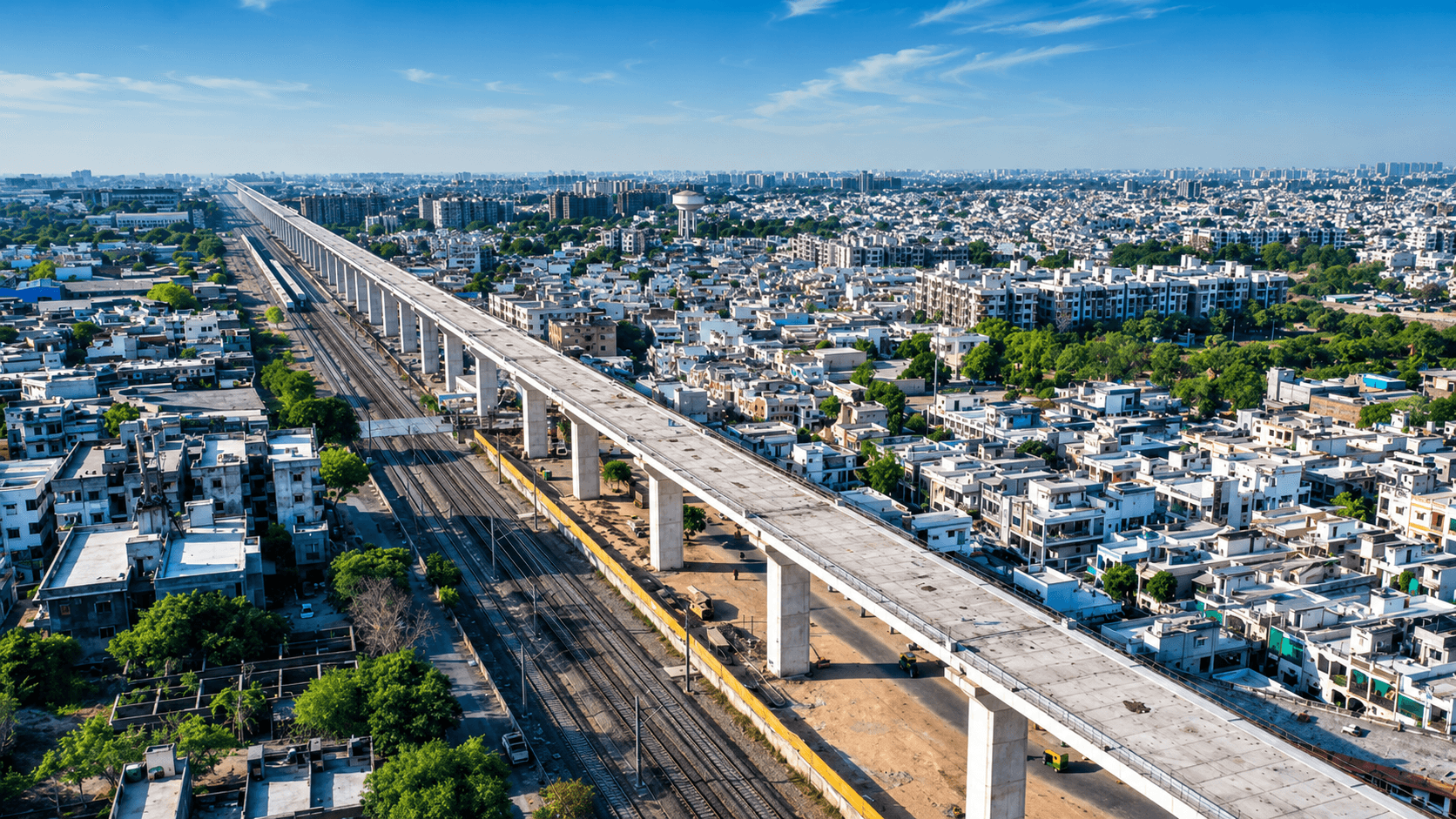
Nearly nine years after Prime Minister Narendra Modi and former Japanese Prime Minister Shinzo Abe laid the foundation stone in September 2017, the project has crossed several major milestones:
Construction continues at Thane, Virar, and Boisar in Maharashtra, while excavation at the underground BKC station in Mumbai is nearing completion.
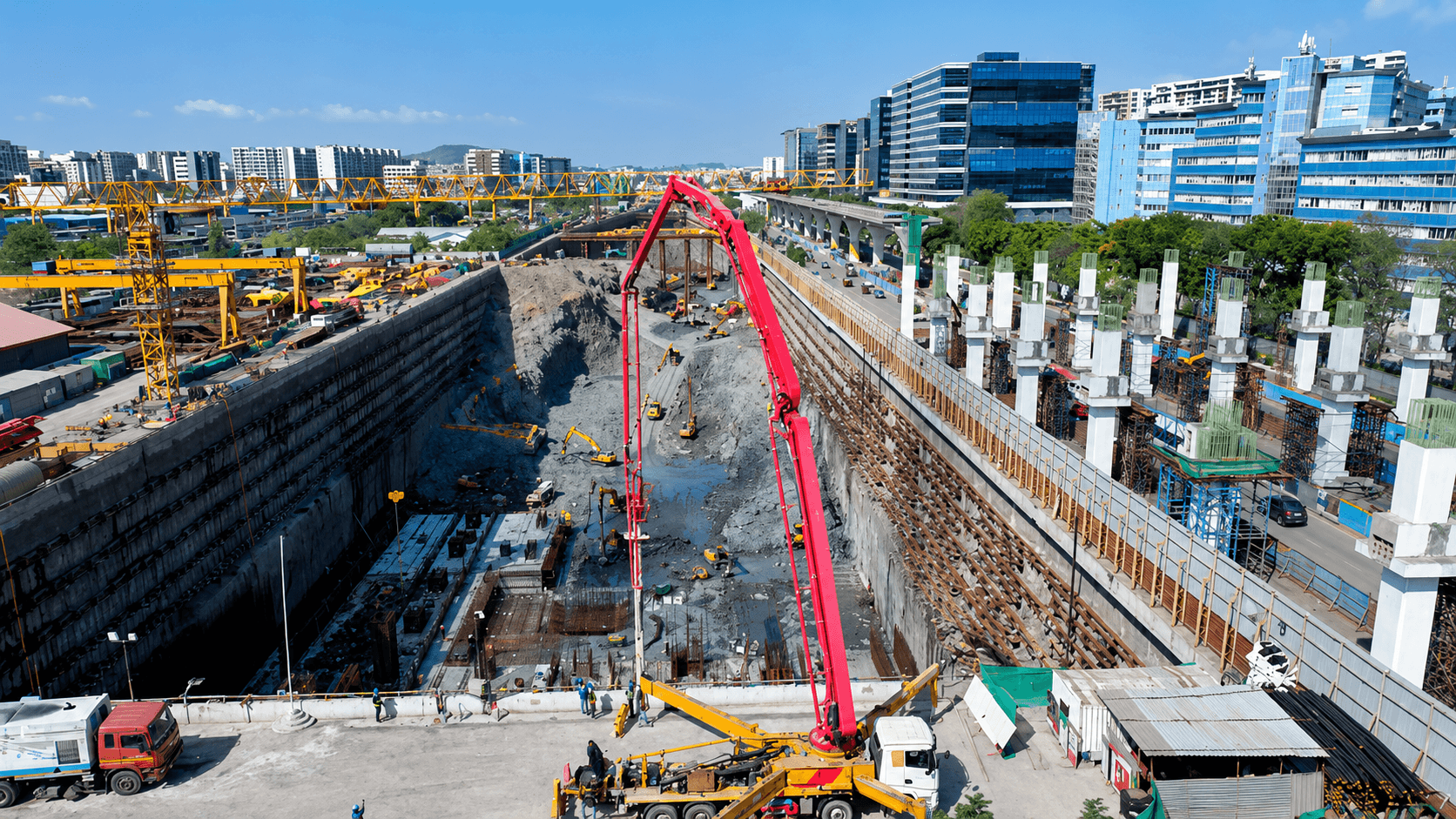
Perhaps the most technically ambitious element of the entire project is the 21-km underground tunnel in Mumbai — and specifically, the 7-km undersea stretch beneath Thane Creek, which will be India's first undersea rail tunnel.
In a major engineering milestone announced just days before the design reveal, the National High Speed Rail Corporation Limited (NHSRCL) lowered the massive cutterhead of India's largest Tunnel Boring Machine (TBM) at Vikhroli in Mumbai's eastern suburbs. The cutterhead measures 13.6 metres in diameter and weighs approximately 350 tonnes - equivalent to around 250 midsize SUVs. It was assembled on-site using 1,600 kg of high-precision welding from five separate shipments, and is fitted with 84 cutter discs, 124 scrapers, and 16 bucket lips.
Two TBMs, each weighing over 3,000 tonnes, are being assembled to build the 16-km section of the 21-km Mumbai tunnel. The TBM will excavate approximately 6 km from Vikhroli toward BKC, passing beneath dense urban areas and the Mithi River. Advanced monitoring systems including Surface Settlement Points (SSP), Optical Displacement Sensors, strain gauges, and seismographs are being deployed to ensure safe tunnelling under Mumbai's urban fabric.
Railway Minister Ashwini Vaishnaw called it "the largest cutter head ever used in any railway project in India."
Union Railway Minister Ashwini Vaishnaw has officially set a target of August 15, 2027 - India's Independence Day - for the first bullet train service to begin operations. The initial phase is expected to cover the Surat–Bilimora section in Gujarat, the most construction-ready stretch of the corridor, before expanding progressively to the full Mumbai–Ahmedabad route.
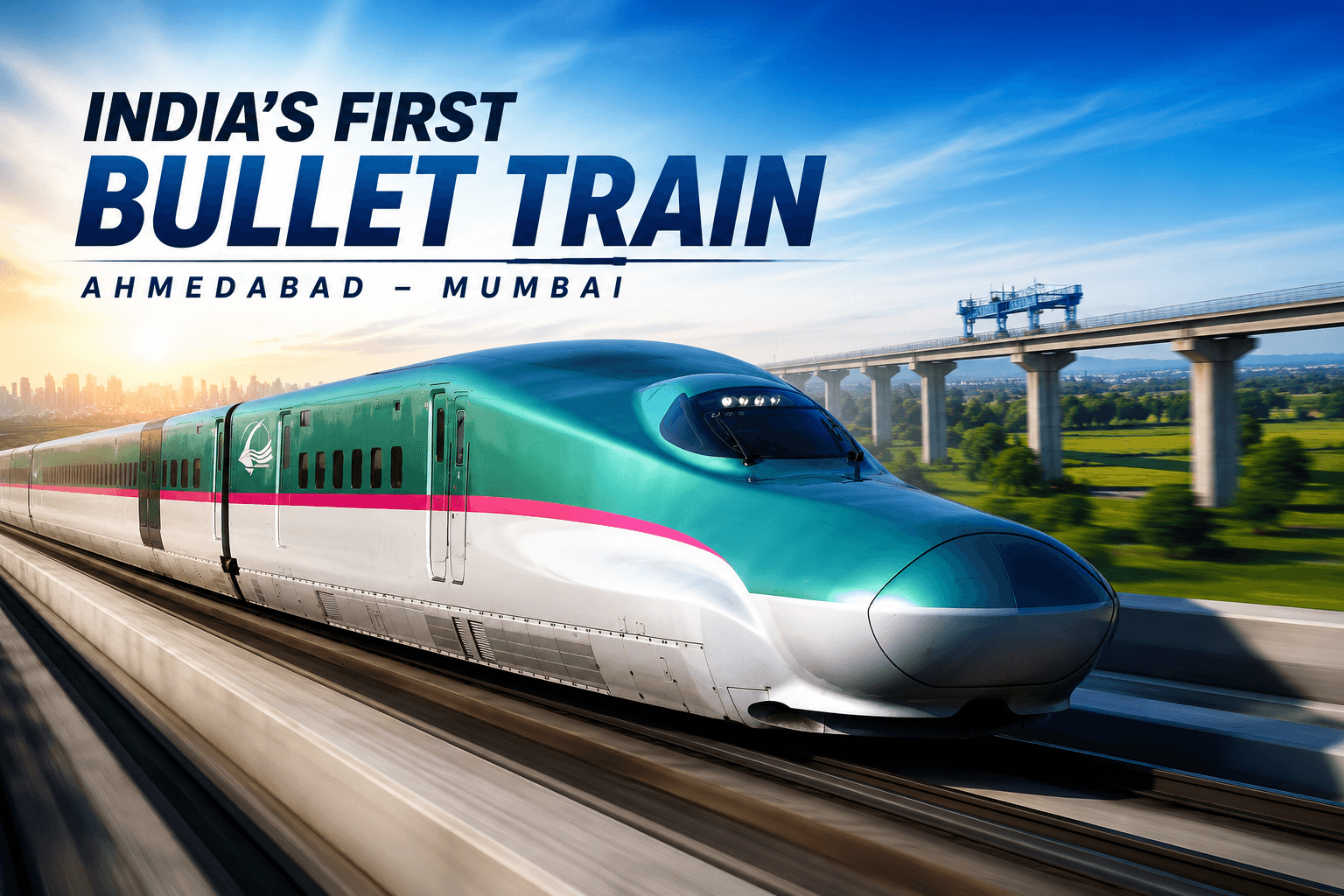
One of the most significant aspects of this project is its pivot toward indigenous manufacturing. After negotiations to procure Japan's Shinkansen E5 trainsets fell through due to pricing concerns, the Indian government doubled down on developing a domestic high-speed rail programme.
ICF and BEML are jointly manufacturing train sets with a design speed of 280 kmph, building upon the success of the Vande Bharat Express platform. These train sets will feature air-conditioning, reclining seats, accessibility amenities for passengers with mobility challenges, and entertainment systems - meeting modern passenger expectations at high speed.
This approach not only reduces India's import dependency but also lays the foundation for future high-speed corridors planned across the country.
The Mumbai–Ahmedabad High-Speed Rail corridor is expected to do far more than move passengers faster. By connecting two of India's most economically vital cities, it is projected to:
The government's PM Gati Shakti National Master Plan aligns the bullet train stations as multi-modal transport hubs, enabling seamless transfers between rail, metro, bus, and road networks.
| Year | Milestone |
|---|---|
| 2017 | Foundation stone laid by PM Modi and PM Abe |
| 2022 | Land acquisition completed in Maharashtra |
| 2024 | ICF awards BEML ₹866.87 crore contract for indigenous train sets |
| March 2026 | BEML–Medha consortium bids to supply 16 trainsets |
| May 17, 2026 | India's largest TBM cutterhead lowered at Vikhroli, Mumbai |
| May 18, 2026 | First look of bullet train design unveiled at Ministry of Railways |
| March 2027 | First indigenous prototype expected to roll out |
| August 2027 | Target launch date for first bullet train service |
The unveiling of India's first bullet train design is more than a visual reveal - it is a symbol of the nation's ambition to join the global league of high-speed rail powers. With 349 km of viaduct already complete, a record-breaking TBM drilling beneath Mumbai, indigenous train sets under manufacture, and a target launch date of August 15, 2027, the Mumbai–Ahmedabad High-Speed Rail corridor is steadily moving from blueprint to reality.
For a country where rail is the backbone of everyday life, the bullet train represents a generational leap - one that promises to reshape not just how Indians travel, but how cities, economies, and opportunities connect across western India.
Share it with your friends